10 Best HVAC Installation Practices
Ensuring optimal performance for your HVAC
Ensuring optimal performance, energy efficiency, and longevity of your HVAC system hinges on meticulous installation practices. At Millennium Heating and Air Services, we emphasize the importance of adhering to industry best practices during HVAC installations. This guide outlines essential steps to achieve a successful HVAC setup.
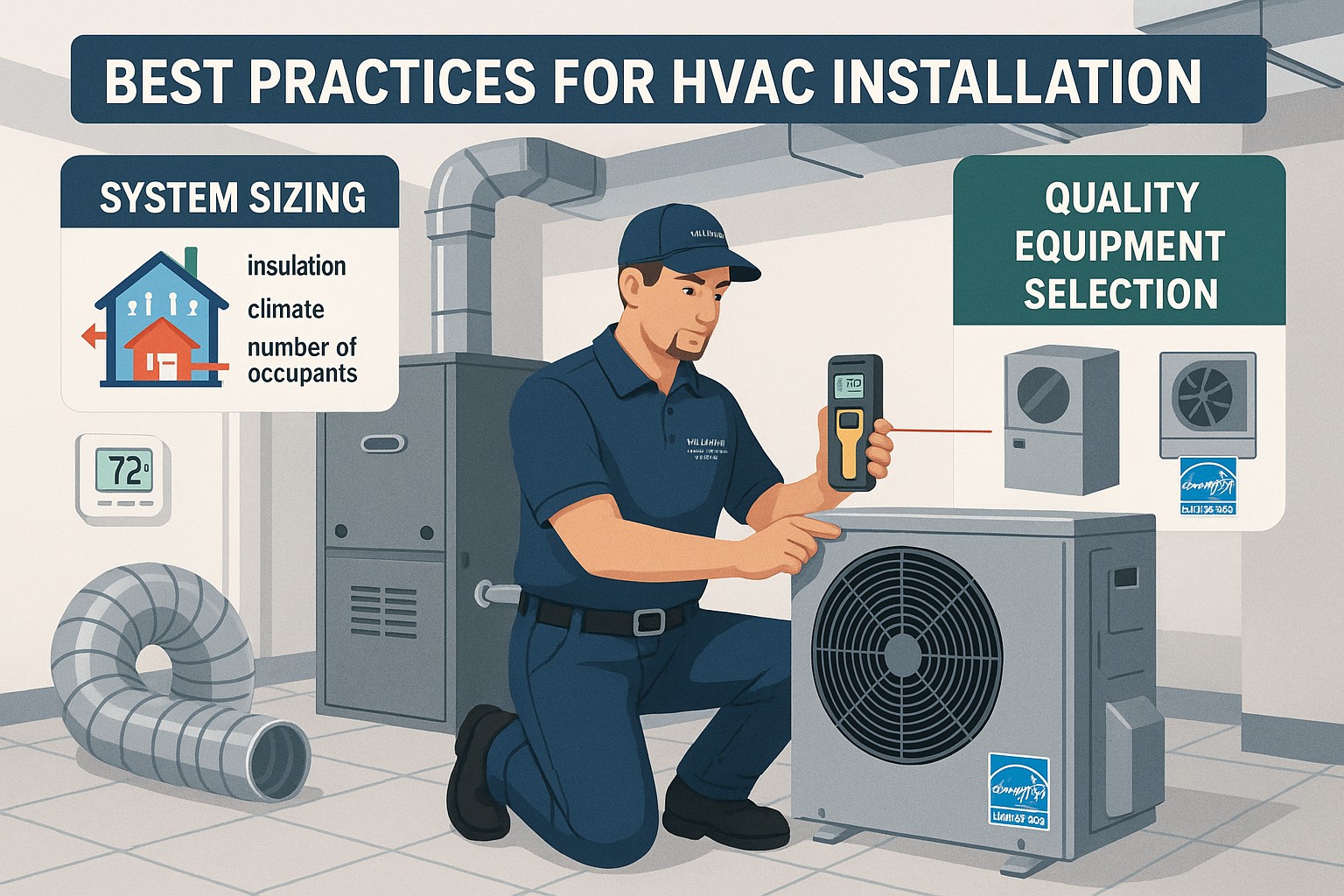
1. Accurate System Sizing and Load Calculation
Why It Matters: Properly sizing your HVAC system is crucial for efficient operation. An oversized system can lead to frequent cycling, while an undersized system may struggle to maintain desired temperatures.
Best Practices:
- Conduct Detailed Load Calculations: Assess factors such as building size, insulation quality, number of occupants, and local climate to determine the appropriate system size. (trueblueac.com)
- Avoid Common Sizing Errors: Ensure the system matches the specific heating and cooling demands of the space to prevent inefficiencies. (resources.duralabel.com)
2. Quality Equipment Selection
Why It Matters: Investing in high-quality equipment ensures reliability, efficiency, and longevity of your HVAC system.
Best Practices:
- Choose Reputable Brands: Opt for manufacturers known for durability and performance.
- Prioritize Essential Components: Select quality thermostats, air filters, and ductwork to enhance overall system efficiency. (florida-academy.edu)
3. Proper Ductwork Design and Installation
Why It Matters: Ductwork plays a pivotal role in distributing conditioned air. Improper design or installation can lead to energy loss and reduced system performance.
Best Practices:
- Design Efficient Ductwork: Minimize bends and ensure ducts are appropriately sized to reduce airflow resistance. (hvacseoagency.com)
- Seal and Insulate Ducts: Use mastic or metal-backed tape to seal joints and insulate ducts to prevent energy loss. (resources.duralabel.com)
4. Accurate Refrigerant Charging
Why It Matters: Correct refrigerant levels are essential for optimal system performance and energy efficiency.
Best Practices:
- Follow Manufacturer Specifications: Use proper instrumentation to charge refrigerant to the exact levels recommended. (resources.duralabel.com)
- Avoid Overcharging or Undercharging: Both can lead to system inefficiencies and potential damage.
5. Ensure Proper Drainage
Why It Matters: Effective drainage prevents water damage, mold growth, and maintains system efficiency.
Best Practices:
- Install Accessible Drain Lines: Ensure they are free from obstructions and properly sloped to facilitate drainage. (resources.duralabel.com)
- Regular Maintenance: Periodically check and clean drain lines to prevent clogs and water buildup.
6. Secure Electrical Connections
Why It Matters: Faulty electrical connections can lead to system failures and pose safety hazards.
Best Practices:
- Adhere to Electrical Codes: Ensure all wiring meets local regulations and manufacturer guidelines. (resources.duralabel.com)
- Label Components Clearly: Proper labeling aids in maintenance and troubleshooting.
7. Comprehensive System Testing and Calibration
Why It Matters: Testing ensures the system operates as intended, identifying and rectifying potential issues before full-scale operation.
Best Practices:
- Perform Thorough Testing: Check airflow, pressure levels, and temperature settings to confirm system performance. (indoortemp.com)
- Calibrate Components: Adjust settings to align with manufacturer specifications for optimal efficiency.
8. Adhere to Manufacturer Guidelines
Why It Matters: Following manufacturer instructions ensures warranty compliance and system reliability.
Best Practices:
- Review Installation Manuals: Familiarize yourself with specific requirements and recommendations. (resources.duralabel.com)
- Maintain Documentation: Keep records of installation procedures and settings for future reference.
9. Prioritize Safety Measures
Why It Matters: Ensuring safety during installation protects both technicians and occupants.
Best Practices:
- Implement Safety Protocols: Use appropriate protective gear and follow established safety procedures. (low-levelaccess.com)
- Conduct Site Assessments: Identify and mitigate potential hazards before commencing work.
10. Plan for Maintenance Access
Why It Matters: Easy access to system components facilitates regular maintenance and prolongs system lifespan.
Best Practices:
- Ensure Adequate Clearance: Provide sufficient space around units for servicing and repairs. (habitatista.com)
- Design for Accessibility: Position components to allow straightforward access without obstructions.
Conclusion
Implementing these best practices during HVAC installation is vital for achieving a system that delivers consistent comfort, operates efficiently, and has an extended service life. At Millennium Heating and Air Services, we are committed to excellence in every installation, ensuring your HVAC system meets the highest standards of performance and reliability.