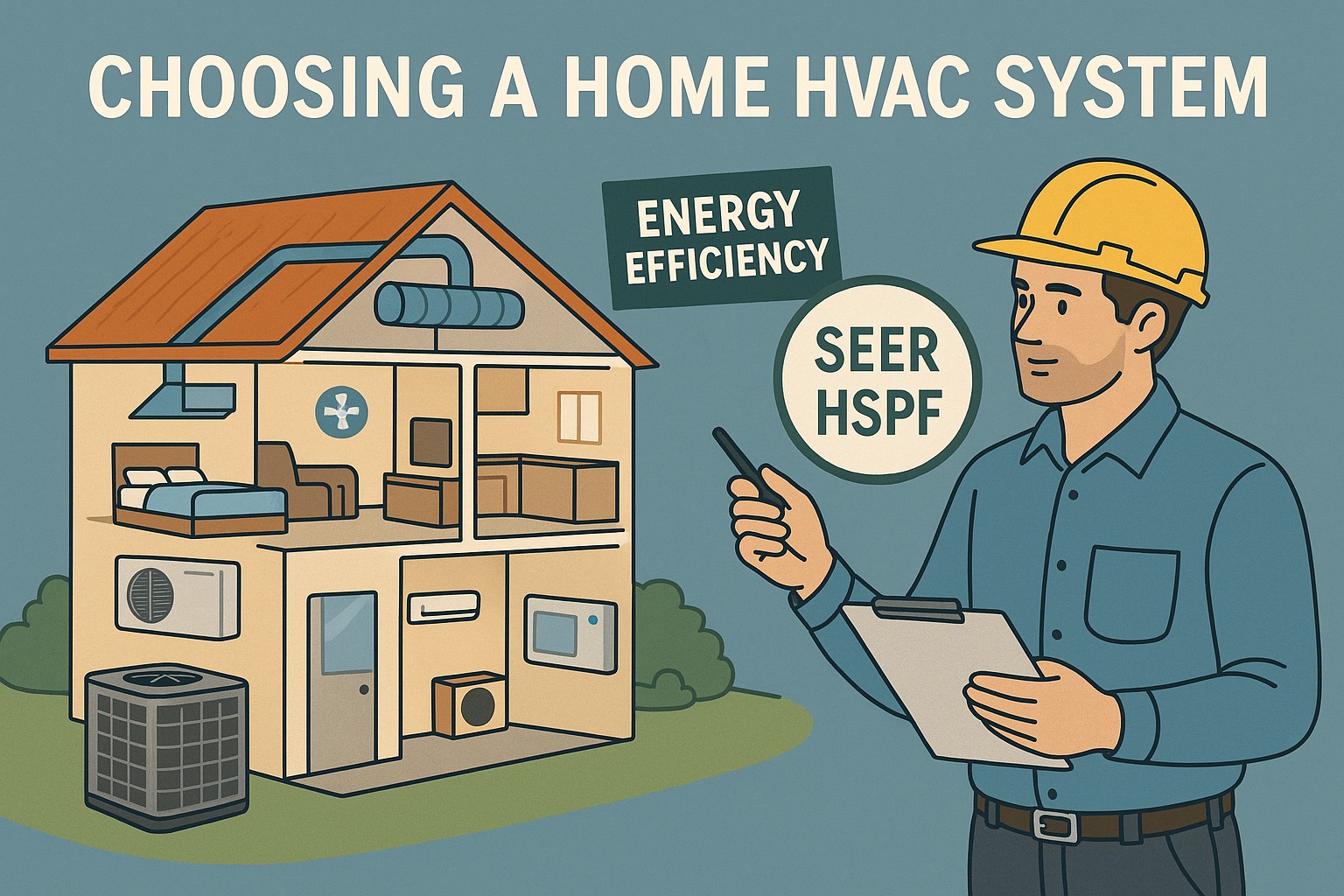
How to Choose an HVAC System
The energy-efficient home
Selecting the right Heating, Ventilation, and Air Conditioning (HVAC) system is crucial for maintaining a comfortable and energy-efficient home. With numerous options available, making an informed decision can be challenging. This guide we will walk you through on how to choose an HVAC system and the key factors to consider when choosing one that best suits your needs.
1. Assess Your Home’s Size and Layout
The size and layout of your home significantly influence the type and capacity of the HVAC system required. Larger homes may necessitate more powerful systems, while smaller homes can benefit from compact units. Additionally, the home’s design, including the number of floors and room configurations, plays a role in determining the most efficient system. Consulting with a professional HVAC contractor can help ensure proper sizing and optimal performance. (oasiscooling.com)
2. Prioritize Energy Efficiency
Energy efficiency is a critical consideration when selecting an HVAC system. High-efficiency models not only reduce energy consumption but also lower utility bills and environmental impact. Key efficiency ratings to consider include:
- Seasonal Energy Efficiency Ratio (SEER): Measures the cooling efficiency of air conditioners. Higher SEER ratings indicate better efficiency.
- Heating Seasonal Performance Factor (HSPF): Assesses the heating efficiency of heat pumps. A higher HSPF rating signifies better performance.
- Annual Fuel Utilization Efficiency (AFUE): Applies to heating systems, indicating the percentage of fuel converted into usable heat.
Opting for systems with higher ratings can lead to significant long-term savings. (theenlightenmentjourney.com)
3. Evaluate System Features and Technology
Modern HVAC systems come equipped with various features that enhance comfort and efficiency:
- Programmable Thermostats: Allow you to set temperature schedules based on daily routines, optimizing energy usage.
- Zoning Systems: Divide your home into different temperature zones, enabling customized heating and cooling for each area.
- Variable-Speed Motors: Adjust their speed based on heating or cooling demands, providing more precise temperature control and energy efficiency.
- Smart Thermostats: Integrate with home automation systems, offering remote control and monitoring through mobile apps.
These advancements contribute to improved comfort and operational savings. (butcherac.com)
4. Consider Indoor Air Quality
An often overlooked aspect is the impact of the HVAC system on indoor air quality. Systems with advanced filtration can significantly reduce allergens, dust, and pollutants, thus improving the overall air you breathe. To further enhance the purity of the air inside your home, consider adding a humidifier or air purifier to your system. (rileyheatandair.com)
5. Assess Noise Levels
The noise level of an HVAC system can affect your home’s comfort. Some systems operate quieter than others, which can be a significant benefit if your HVAC unit rests near living spaces or bedrooms. If noise is a concern, look at systems with the lowest possible decibel (dB) level. (woodwardheating.com)
6. Evaluate Maintenance Requirements
Regular maintenance is essential for the longevity and efficiency of your HVAC system. Inquire about the maintenance needs of the systems you’re considering, including filter replacement schedules and recommended service intervals. Some manufacturers offer maintenance plans or extended warranties that can provide peace of mind and protect your investment. (iaqcolorado.com)
7. Review Warranty and Support
A comprehensive warranty can shield you from unexpected repair costs. Look for HVAC systems that come with robust warranties covering parts and labor. Additionally, consider the manufacturer’s reputation for customer support and the availability of service technicians in your area. (rileyheatandair.com)
8. Consider Installation and Maintenance Costs
The initial installation cost and ongoing maintenance expenses are critical factors to consider when selecting an HVAC system. While some systems, such as central air, might have higher installation costs due to the need for ductwork, others, such as ductless mini-splits, may offer savings in long-term maintenance. (oasiscooling.com)
9. Explore Available Rebates and Incentives
Many regions offer rebates and incentives for installing energy-efficient HVAC systems. Check with your local utility company and government programs to see if you qualify for any financial incentives. (keithpowellheatingandcooling.com)
10. Choose a Reputable Contractor
Selecting a licensed and experienced HVAC contractor is crucial for proper system installation and maintenance. A reputable contractor can assess your home’s specific needs, recommend suitable systems, and ensure correct installation. Research and choose a contractor with positive reviews and a proven track record. (mbhaynes.com)
Conclusion
Choosing the right HVAC system involves careful consideration of your home’s size, energy efficiency, technological features, indoor air quality, noise levels, maintenance requirements, warranty, installation costs, available incentives, and the expertise of your contractor. By thoroughly evaluating these factors, you can select an HVAC system that ensures comfort, efficiency, and long-term satisfaction for your home.