11 HVAC Components that You Must Understand
HVAC Components Explained
Heating, Ventilation, and Air Conditioning (HVAC) systems are integral to maintaining comfortable indoor environments. They regulate temperature, humidity, and air quality, ensuring a pleasant atmosphere in residential and commercial spaces. Understanding the key components of an HVAC system can help in efficient operation and maintenance.
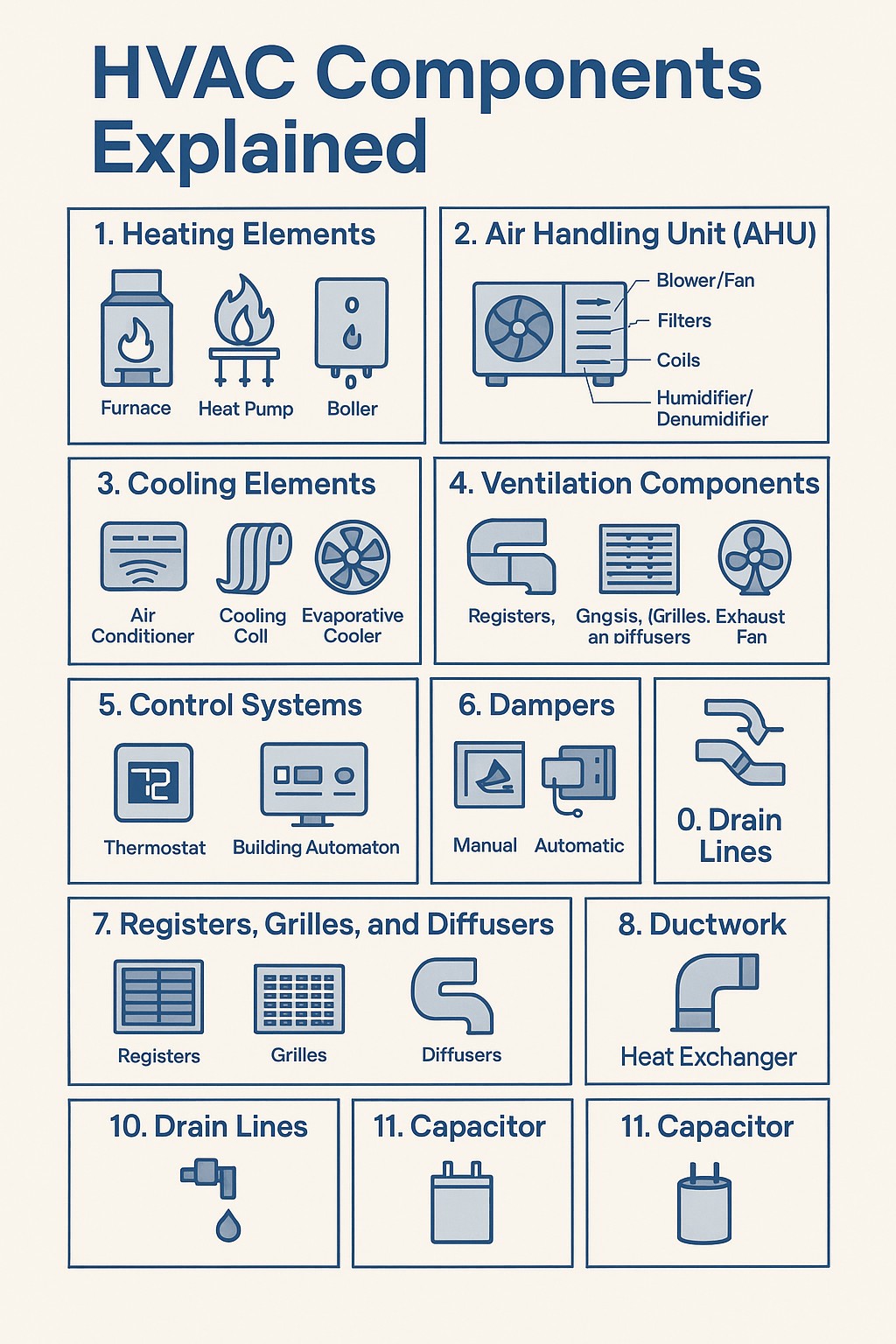
1. Heating Elements
Heating components are responsible for generating warmth within an HVAC system. Common heating elements include:
- Furnaces: Utilize combustion or electric resistance to heat air, which is then circulated throughout the building.
- Heat Pumps: Transfer heat from external sources (air, water, or ground) into the building, providing both heating and cooling functions.
- Boilers: Heat water to produce steam or hot water, which is distributed via radiators or underfloor systems.
2. Air Handling Unit (AHU)
The Air Handling Unit is a central component that regulates and circulates air within the HVAC system. It typically includes:
- Blower/Fan: Moves air through the system.
- Filters: Remove dust and contaminants to ensure clean air distribution.
- Coils: Heat or cool the air as it passes through.
- Humidifiers/Dehumidifiers: Adjust humidity levels for comfort.
- Dampers: Control airflow and pressure within the system.
These components work together to condition and distribute air effectively throughout the building. (en.wikipedia.org)
3. Cooling Elements
Cooling components are essential for lowering indoor temperatures and maintaining comfort during warmer months. Key cooling elements include:
- Air Conditioners: Remove heat from indoor air and release it outside, typically using refrigerants.
- Cooling Coils: Located within the AHU, they cool the air as it passes over them.
- Evaporative Coolers: Use water evaporation to cool air, suitable for dry climates.
4. Ventilation Components
Ventilation ensures the continuous exchange of indoor and outdoor air, maintaining air quality and comfort. Essential ventilation components include:
- Ductwork: Network of channels that transport air to and from the AHU.
- Registers, Grilles, and Diffusers: Distribute conditioned air into rooms and return air back to the system.
- Exhaust Fans: Remove stale air and pollutants from indoor spaces.
- Fresh Air Intake: Allows outdoor air to enter the system, diluting indoor pollutants.
5. Control Systems
Modern HVAC systems utilize control mechanisms to regulate operation and ensure efficiency:
- Thermostats: Set desired temperature levels and control heating or cooling cycles.
- Building Automation Systems (BAS): Monitor and control HVAC components, optimizing performance and energy usage.
- Sensors: Measure variables like temperature, humidity, and air quality to inform system adjustments.
6. Dampers
Dampers are movable plates within ducts that regulate or block airflow to specific zones, essential for zoning systems. They help control temperatures in different parts of the building. Types of dampers include:
- Manual Dampers: Adjusted by hand at the duct junction.
- Automatic Dampers: Controlled electronically via zoning systems or thermostats.
7. Registers, Grilles, and Diffusers
These are the visible components in each room:
- Registers: Adjustable vents that direct airflow into rooms.
- Grilles: Fixed return openings that draw air back to the system.
- Diffusers: Spread air evenly across the space for optimal comfort.
These elements affect both noise levels and air distribution efficiency. (hvacseoagency.com)
8. Ductwork
Ducts are passageways that channel and distribute warm or cool air throughout your living space. They’re typically made of aluminum but can also be made of fiberglass, fiberboard, or flex duct (a wireframe sheathed in plastic). Ducts wind through your attic, garage, ceilings, basement, and walls. (progressiveairsystems.com)
9. Heat Exchanger
A heat exchanger is a component of your furnace that absorbs heat from the combustion chamber. Once this heated air reaches a certain temperature, an electric blower motor kicks on. This motor drives a fan that sends warm air through the registers of each room. (progressiveairsystems.com)
10. Drain Lines
The drain lines, or drainpipes, carry condensation out of the air conditioner. These condensate droplets form when hot air changes into cold air and produces humidity. Drain lines prevent moisture buildup, which can foster mold, mildew, and algae. If they become clogged, they can cause water damage or flooding. (progressiveairsystems.com)
11. Capacitor
The capacitor is a small component inside your HVAC system that delivers a jolt of electricity every time a heating or cooling cycle starts. (progressiveairsystems.com)
Conclusion
A comprehensive understanding of HVAC components is essential for effective system operation and maintenance. Each part plays a specific role in ensuring indoor comfort and air quality. Regular inspection and servicing of these components can enhance system efficiency and longevity.