HVAC Terminology for Beginners
# HVAC Terminology for Beginners
Heating, Ventilation, and Air Conditioning (HVAC) systems are integral to maintaining comfort and air quality in residential and commercial spaces. Understanding common HVAC terminology can empower you to make informed decisions about your system’s maintenance, efficiency, and upgrades.
## Key HVAC Terms Explained
### 1. BTU (British Thermal Unit)
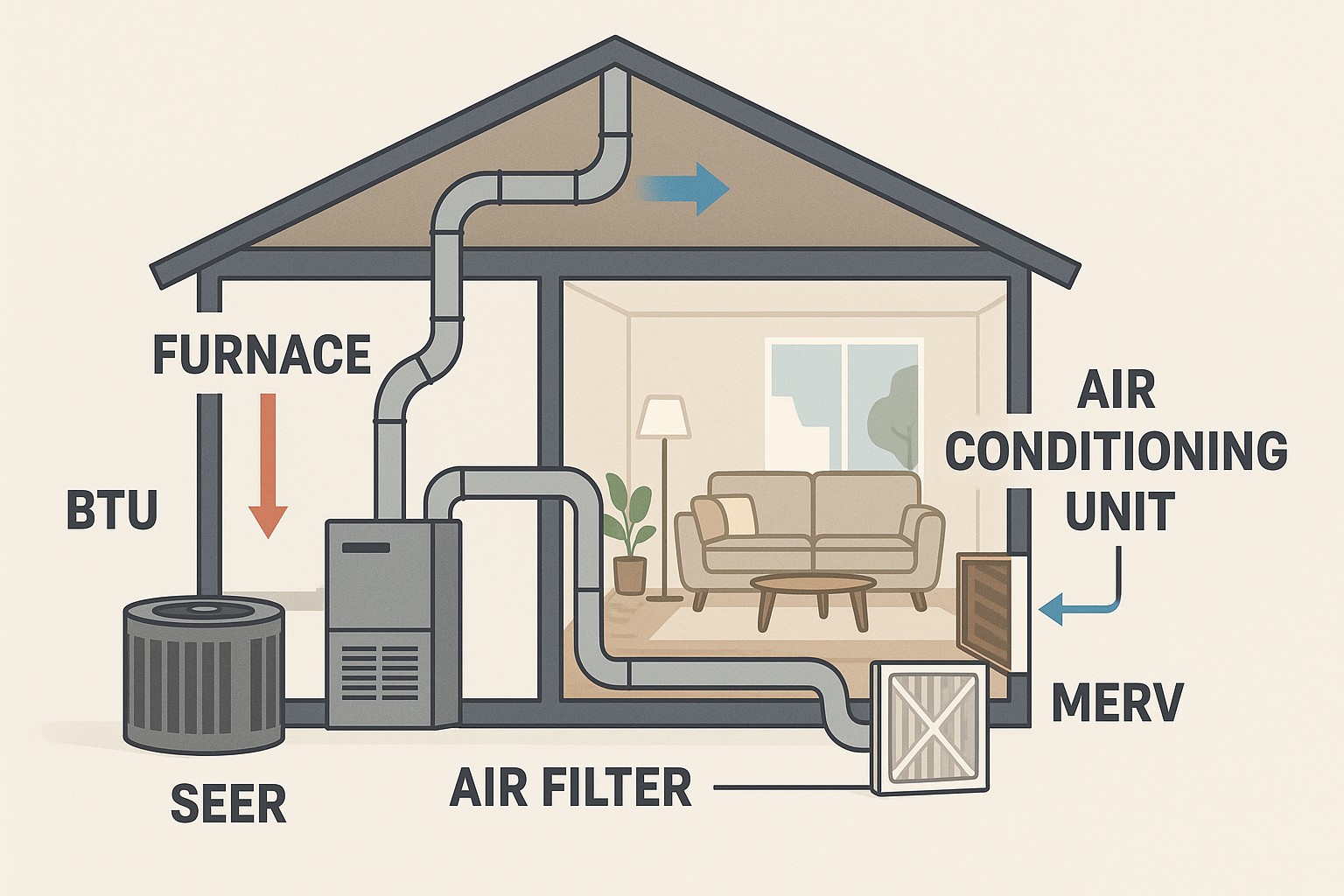
A BTU is a unit of measurement that indicates the amount of heat an air conditioning system can remove from a room per hour. The higher the BTU rating, the more cooling power the unit has. For instance, if you’re cooling a large living room, you’ll need a system with a higher BTU rating than you would for a small bedroom. Choosing the right BTU rating is essential for ensuring your home is adequately cooled without wasting energy. ([abbottac.com](https://www.abbottac.com/air-conditioning-hvac-blog-posts/conditioning-hvac-system?utm_source=openai))
### 2. SEER (Seasonal Energy Efficiency Ratio)
SEER measures the energy efficiency of cooling equipment, calculated based on a seasonal average as opposed to specific laboratory conditions. The SEER is the ratio of cooling output in British Thermal Units (BTU) divided by electricity usage in kilowatt-hours. Higher SEER ratings indicate greater efficiency and lower energy costs. ([hvacrcareerconnectny.com](https://hvacrcareerconnectny.com/basic-hvac-terms/?utm_source=openai))
### 3. Furnace
A furnace is a gas-fired heating system. This system burns gas to generate heat, then distributes the heat using a motor fan. ([eazybreezyheat-ac.com](https://www.eazybreezyheat-ac.com/hvac-terms/?utm_source=openai))
### 4. Filter
A filter prevents harmful air particles from entering your HVAC system. You should clean and replace your filters regularly to ensure their effectiveness. ([eazybreezyheat-ac.com](https://www.eazybreezyheat-ac.com/hvac-terms/?utm_source=openai))
### 5. MERV (Minimum Efficiency Reporting Value)
MERV is an air filter rating system based on a scale of 1 to 16. For example, a MERV rating of 16 indicates a high-performing filter. ([eazybreezyheat-ac.com](https://www.eazybreezyheat-ac.com/hvac-terms/?utm_source=openai))
### 6. ENERGY STAR®
ENERGY STAR is the Environmental Protection Agency’s (EPA’s) certification program that helps buyers select the most energy-efficient HVAC systems and appliances. ([eazybreezyheat-ac.com](https://www.eazybreezyheat-ac.com/hvac-terms/?utm_source=openai))
### 7. Air Handler
An air handler is a component of the equipment that circulates air and distributes it into the building. ([eticampus.edu](https://eticampus.edu/hvacr-program/hvacr-technician/10-hvac-terms-every-technician-needs-to-know/?utm_source=openai))
### 8. Compressor
The compressor is the part of an HVAC system, typically located in the outdoor unit, that pressurizes and circulates refrigerant throughout the system. ([eticampus.edu](https://eticampus.edu/hvacr-program/hvacr-technician/10-hvac-terms-every-technician-needs-to-know/?utm_source=openai))
### 9. Evaporator Coil
The evaporator coil is located in the indoor unit and absorbs heat from the air, cooling it as it passes over the coil. ([eticampus.edu](https://eticampus.edu/hvacr-program/hvacr-technician/10-hvac-terms-every-technician-needs-to-know/?utm_source=openai))
### 10. Ductwork
Ductwork is a network of ducts that distributes air throughout your home. Well-designed and sealed ductwork is critical for efficient HVAC performance. ([galaxyservices.com](https://galaxyservices.com/blog/understanding-hvac-terminology/?utm_source=openai))
### 11. Heat Pump
A heat pump is a device that transfers heat from one place to another, providing both heating and cooling capabilities. ([eticampus.edu](https://eticampus.edu/hvacr-program/hvacr-technician/10-hvac-terms-every-technician-needs-to-know/?utm_source=openai))
### 12. Thermostat
A thermostat is a device used to control and regulate the temperature settings of the equipment. ([eticampus.edu](https://eticampus.edu/hvacr-program/hvacr-technician/10-hvac-terms-every-technician-needs-to-know/?utm_source=openai))
### 13. Refrigerant
Refrigerant is a chemical compound used in climate control systems to absorb and release heat for cooling or heating purposes. ([eticampus.edu](https://eticampus.edu/hvacr-program/hvacr-technician/10-hvac-terms-every-technician-needs-to-know/?utm_source=openai))
### 14. Split System
A split system is a common residential HVAC setup featuring separate indoor and outdoor units. ([eticampus.edu](https://eticampus.edu/hvacr-program/hvacr-technician/10-hvac-terms-every-technician-needs-to-know/?utm_source=openai))
### 15. Ductless Mini-Split
A ductless mini-split is an air conditioning system without ductwork that consists of multiple small air handlers within each room that are connected to a single condensing unit. ([hvacrcareerconnectny.com](https://hvacrcareerconnectny.com/basic-hvac-terms/?utm_source=openai))
### 16. SEER (Seasonal Energy Efficiency Ratio)
SEER measures the energy efficiency of cooling equipment, calculated based on a seasonal average as opposed to specific laboratory conditions. The SEER is the ratio of cooling output in British Thermal Units (BTU) divided by electricity usage in kilowatt-hours. ([hvacrcareerconnectny.com](https://hvacrcareerconnectny.com/basic-hvac-terms/?utm_source=openai))
### 17. IAQ (Indoor Air Quality)
Indoor air quality refers to the healthiness of the air inside your home. Factors that impact IAQ include ventilation, humidity, airborne pollutants, and filter efficiency. A well-designed HVAC system with HEPA filtration, UV lights, or air purifiers can significantly improve IAQ, reducing allergens, odors, and mold. ([cmbair.com](https://www.cmbair.com/blog/introduction-to-hvac-basic-terminology-explained?utm_source=openai))
### 18. AFUE (Annual Fuel Utilization Efficiency)
AFUE measures a furnace’s efficiency in converting heat to energy. A higher percentage means higher efficiency and lower energy costs. ([caloosacooling.com](https://www.caloosacooling.com/blog/hvac-system-terms/?utm_source=openai))
### 19. HSPF (Heating Seasonal Performance Factor)
HSPF measures the efficiency of a heat pump system that provides both heat and air conditioning. HSPF is the ratio of the total space heating required during the heating season in BTU divided by the total electricity used by the heat pump system, expressed in kilowatt-hours. ([hvacrcareerconnectny.com](https://hvacrcareerconnectny.com/basic-hvac-terms/?utm_source=openai))
### 20. VAV (Variable Air Volume)
VAV is an energy-efficient commercial air conditioning system that distributes a stable air supply (sometimes from a base building system) by varying the air flow rate to control the temperature. ([hvacrcareerconnectny.com](https://hvacrcareerconnectny.com/basic-hvac-terms/?utm_source=openai))
## Conclusion
Familiarity with these HVAC terms can help you communicate more effectively with your contractor, make informed decisions about your home’s heating and cooling needs, and ensure your system operates efficiently. Regular maintenance and understanding these terms can lead to improved comfort and energy savings.